The Frari Church
One of our favorite moments in Venice happened completely by accident. We ducked into the Frari Church while waiting for our laundry wash timer to go off and ended up wandering through one of the most extraordinary places we've seen so far.
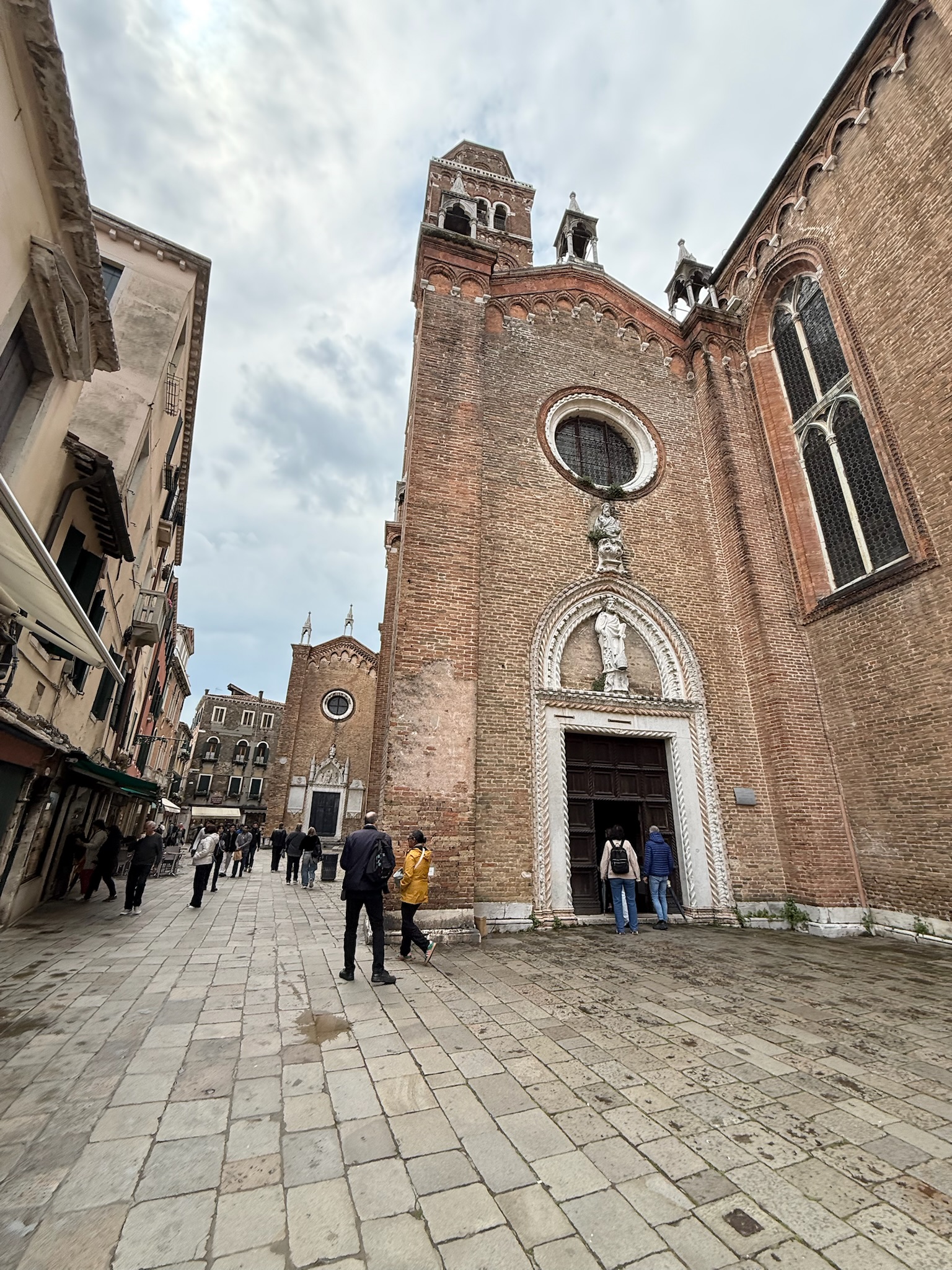
From the outside, the church is surprisingly plain, just weathered brick tucked into the streets of Venice. You'd never guess what's inside.
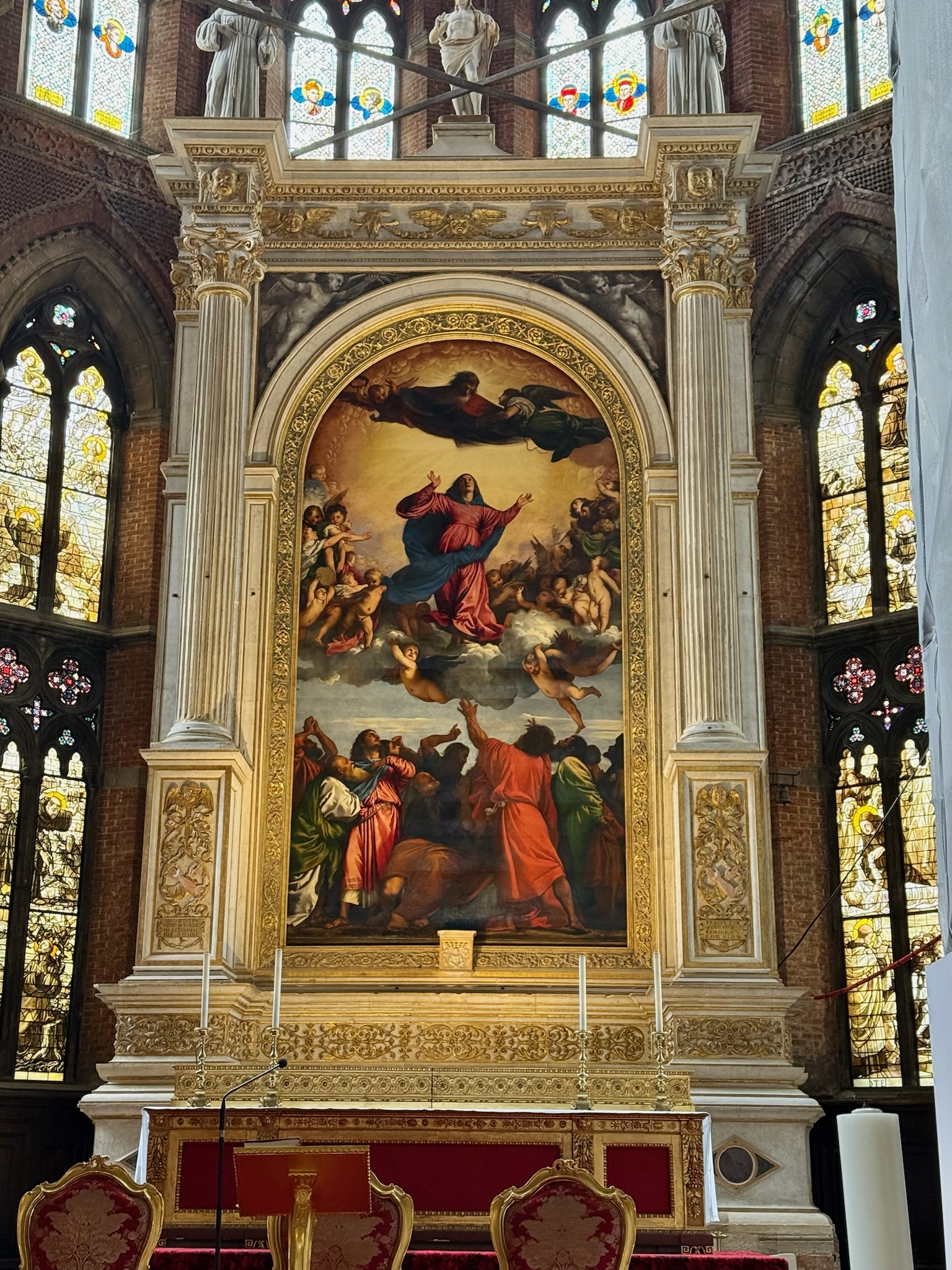
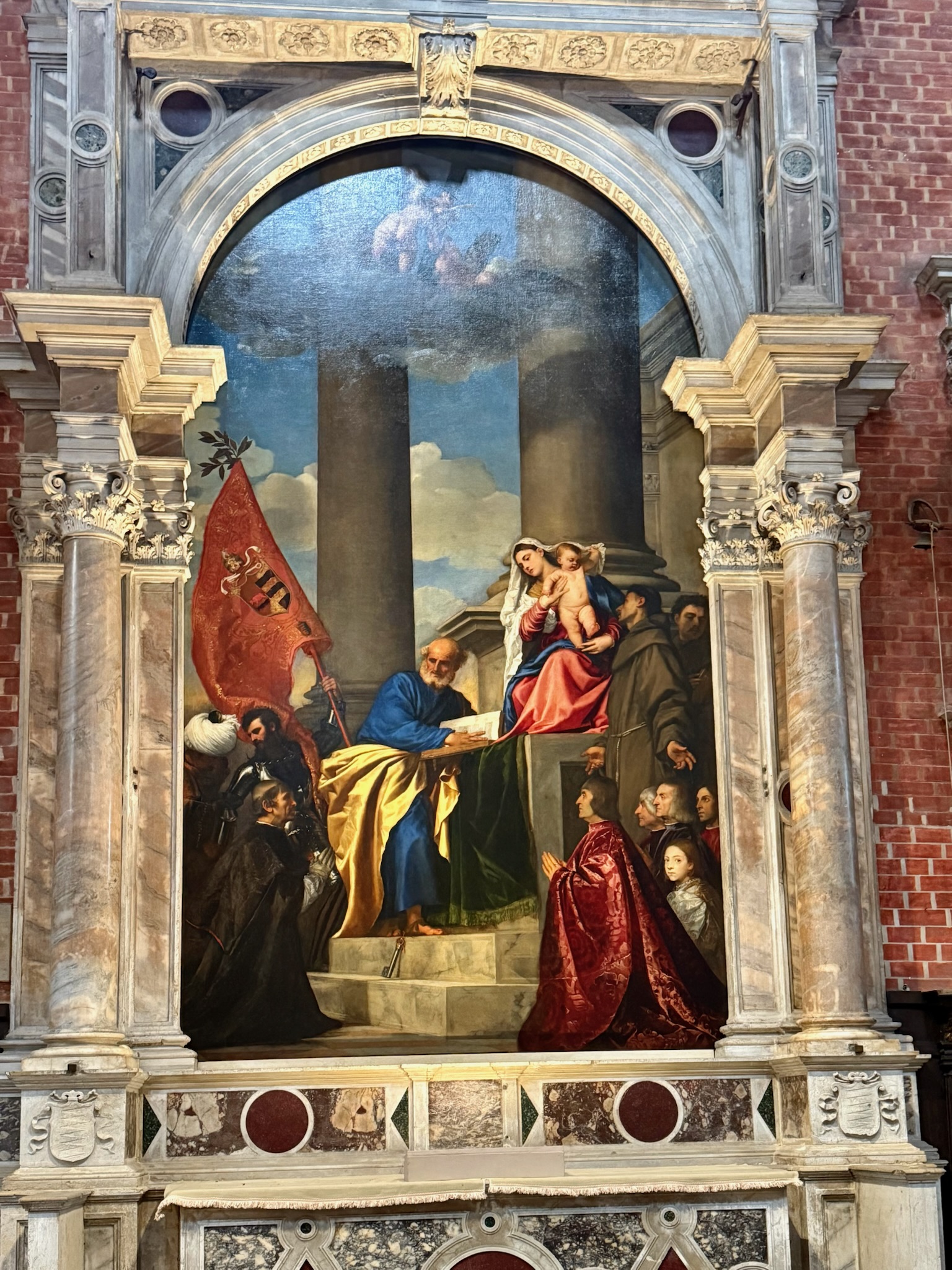
The Frari holds two Titians that anchor the entire church. The Assumption of the Virgin, sitting on the high altar, is the painting that made Titian's reputation — nearly 23 feet tall, its three zones (the apostles below, the ascending Virgin at center, God descending from above) designed to be read clearly from all the way at the back of the nave. Off to the side hangs the Madonna di Ca' Pesaro, a far more radical composition for its time — an off-center Virgin, Jacopo Pesaro shown in armor, a turbaned Turkish prisoner, and family members gazing directly out at the viewer rather than at the sacred scene itself, breaking with convention in a way that must have felt startling in its day.
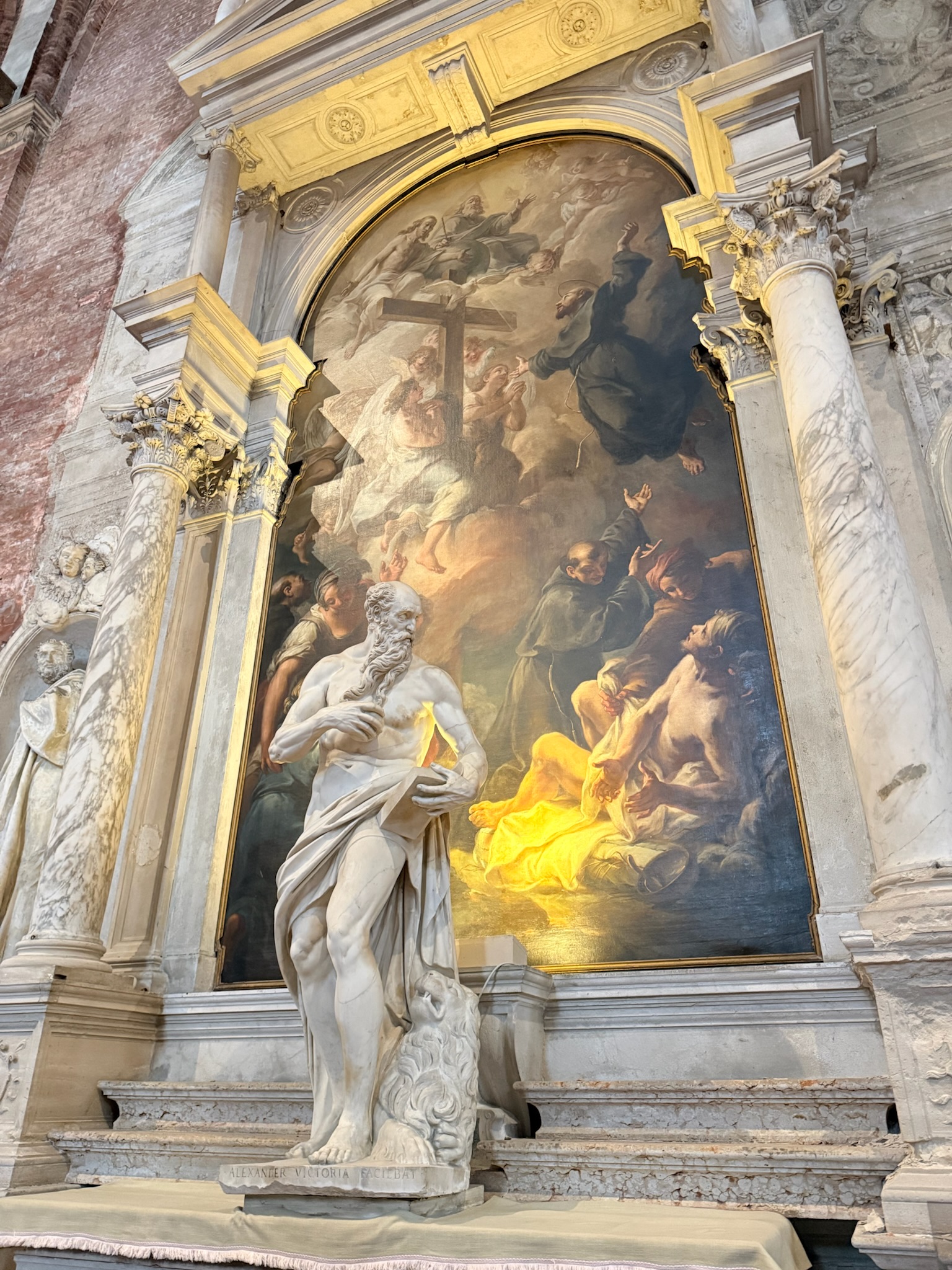
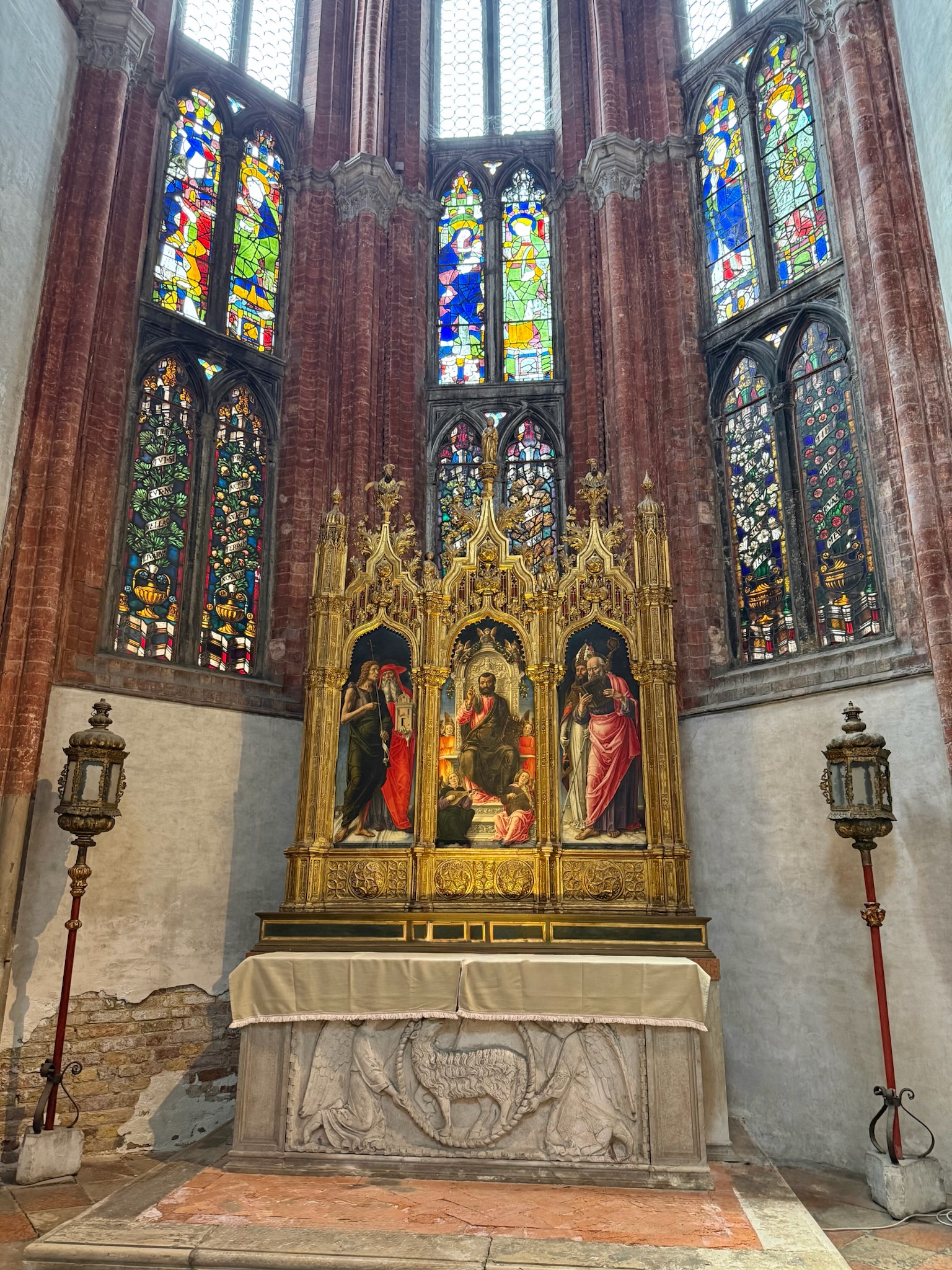
Elsewhere in the church, Palma il Giovane's Miraculous Healing with the Eucharist shows a bishop elevating a monstrance toward a desperate, reaching woman, an angel descending from above — Palma was Titian's great-nephew, and finished one of Titian's own final paintings after his death. The Vivarini family gets its own quiet showcase too: Bartolomeo Vivarini's 1474 Triptych of St. Mark, painted in the late Gothic style with a gold frame, sits not far from his nephew Alvise Vivarini's Madonna Enthroned with Saints from a few decades later — the same family, the same triptych format, but the figures gradually becoming more three-dimensional and spatially aware. Standing between them is like watching two centuries of Venetian painting evolve in the space of a single room.
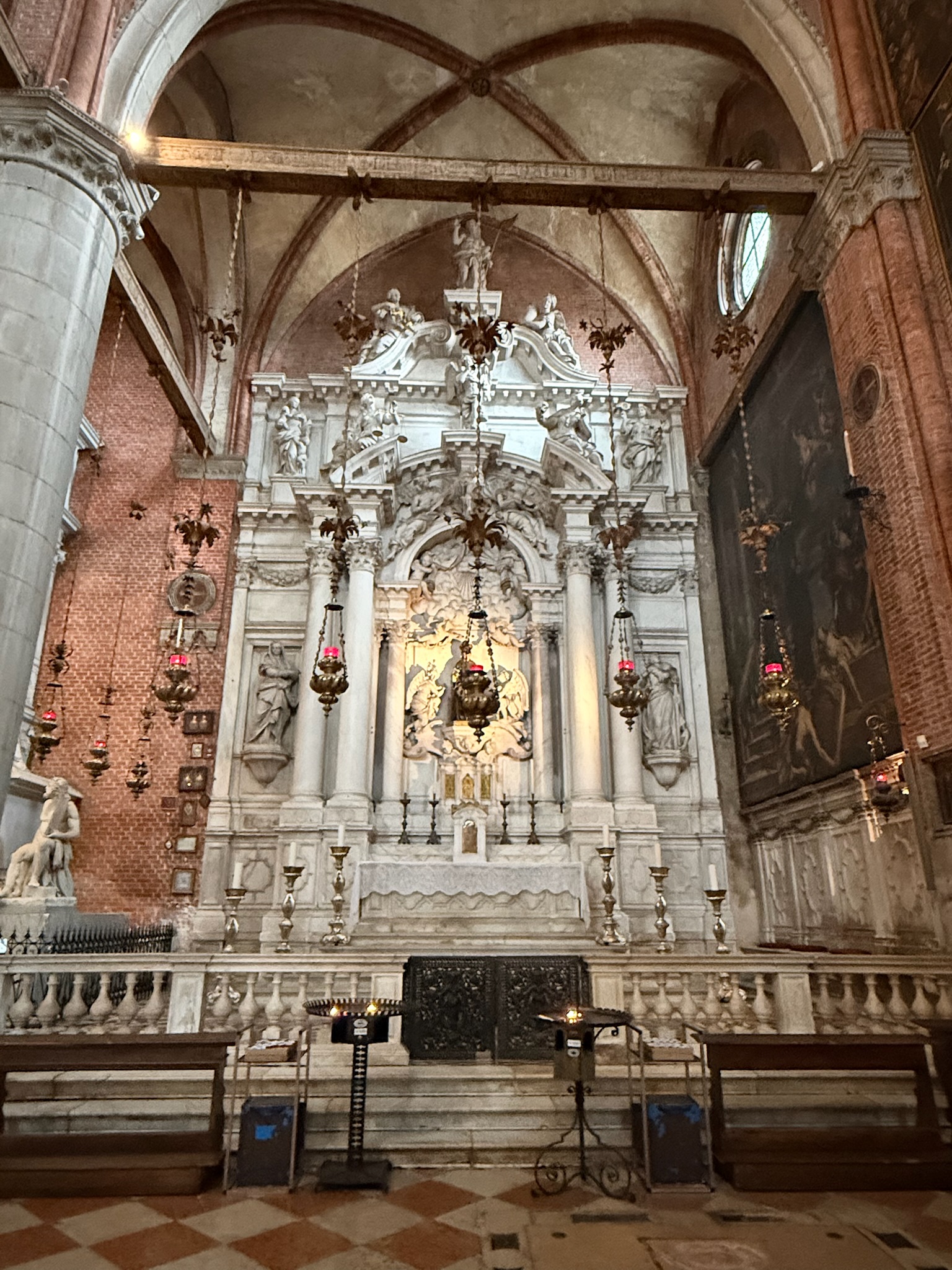
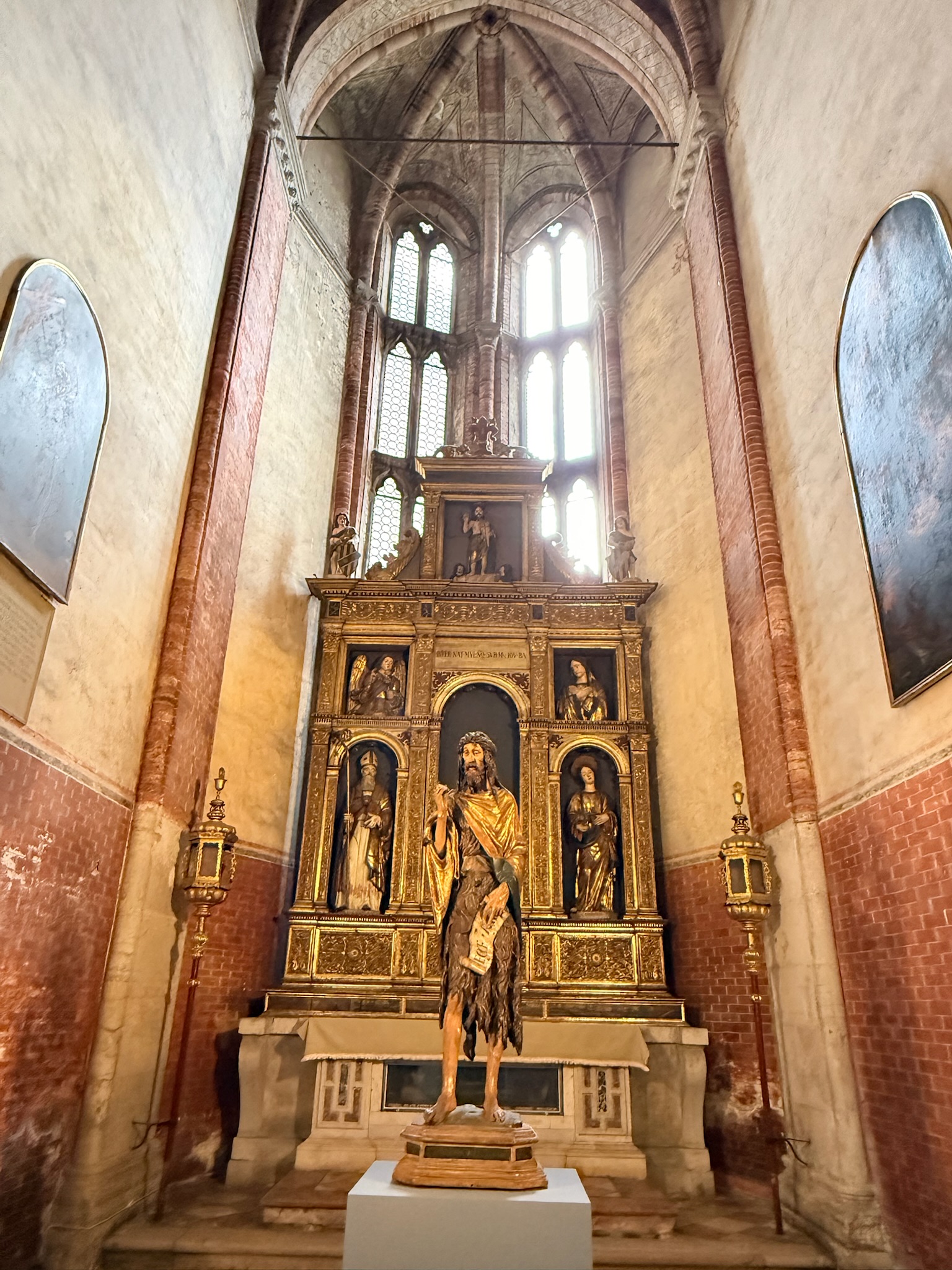
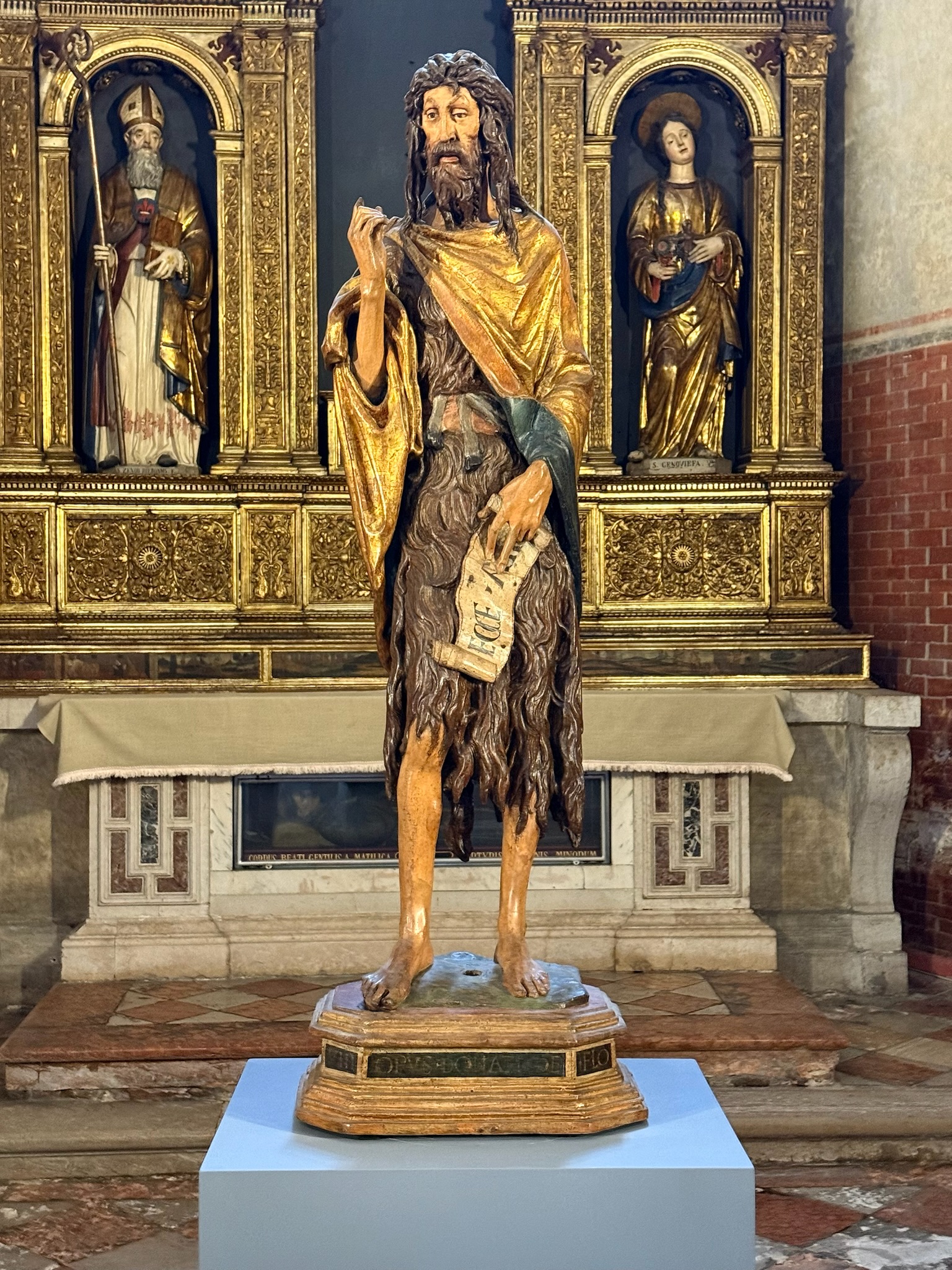
Donatello's wooden sculpture of St. John the Baptist stands in its own gilded altar, flanked by painted saints in golden niches — and the contrast couldn't be sharper. Every surface around it gleams; the figure itself is gaunt, weathered, and psychologically raw, wrapped in a camel-skin garment, holding a scroll reading Ecce Agnus Dei. Signed OPUS DONATELLI FLO at its base, marking it as one of the only works Donatello ever made outside Florence, it's a distinctly Florentine sensibility dropped into the middle of a fully Venetian setting — rawer and more demanding than everything gilded and glowing around it.
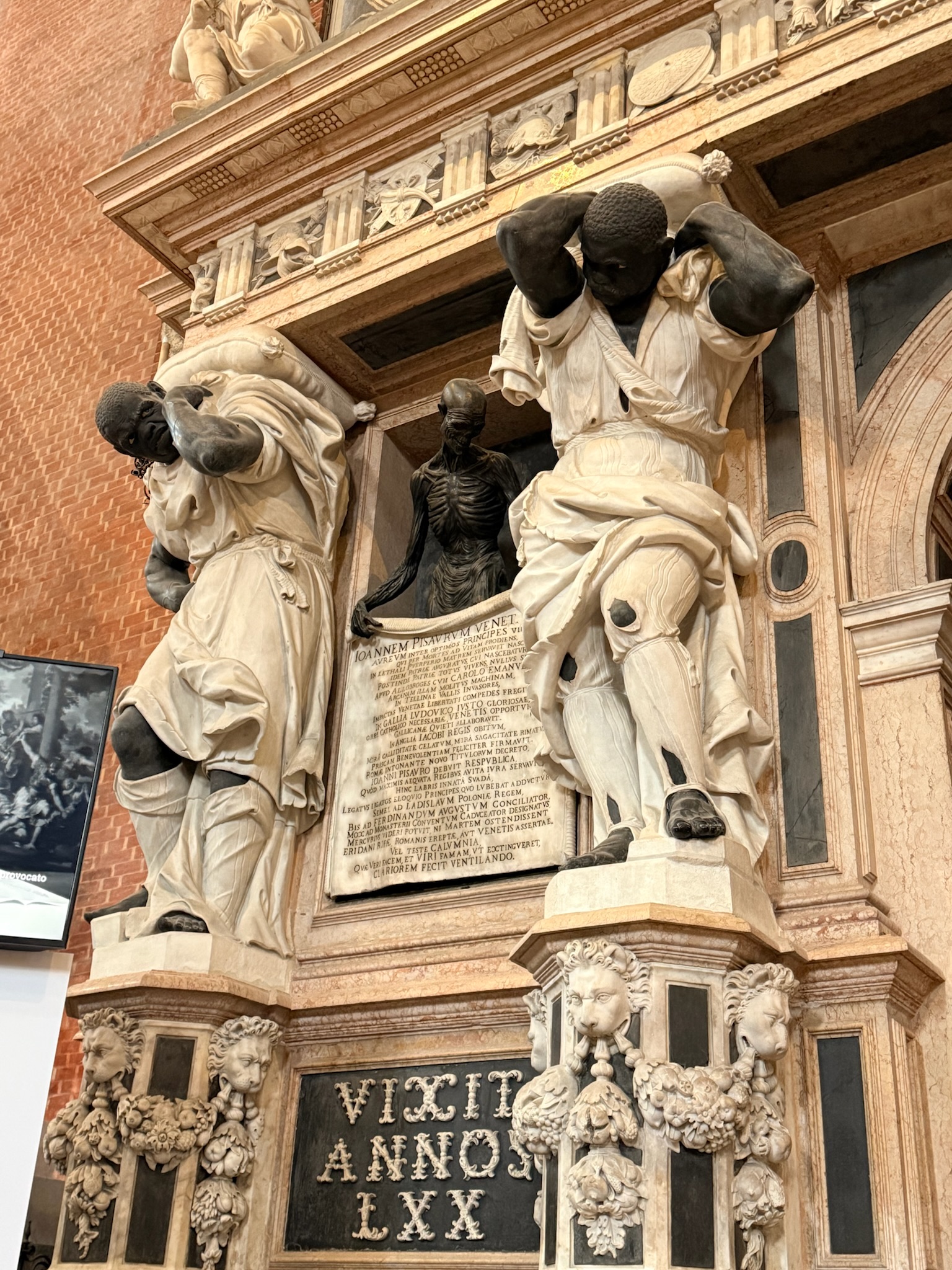
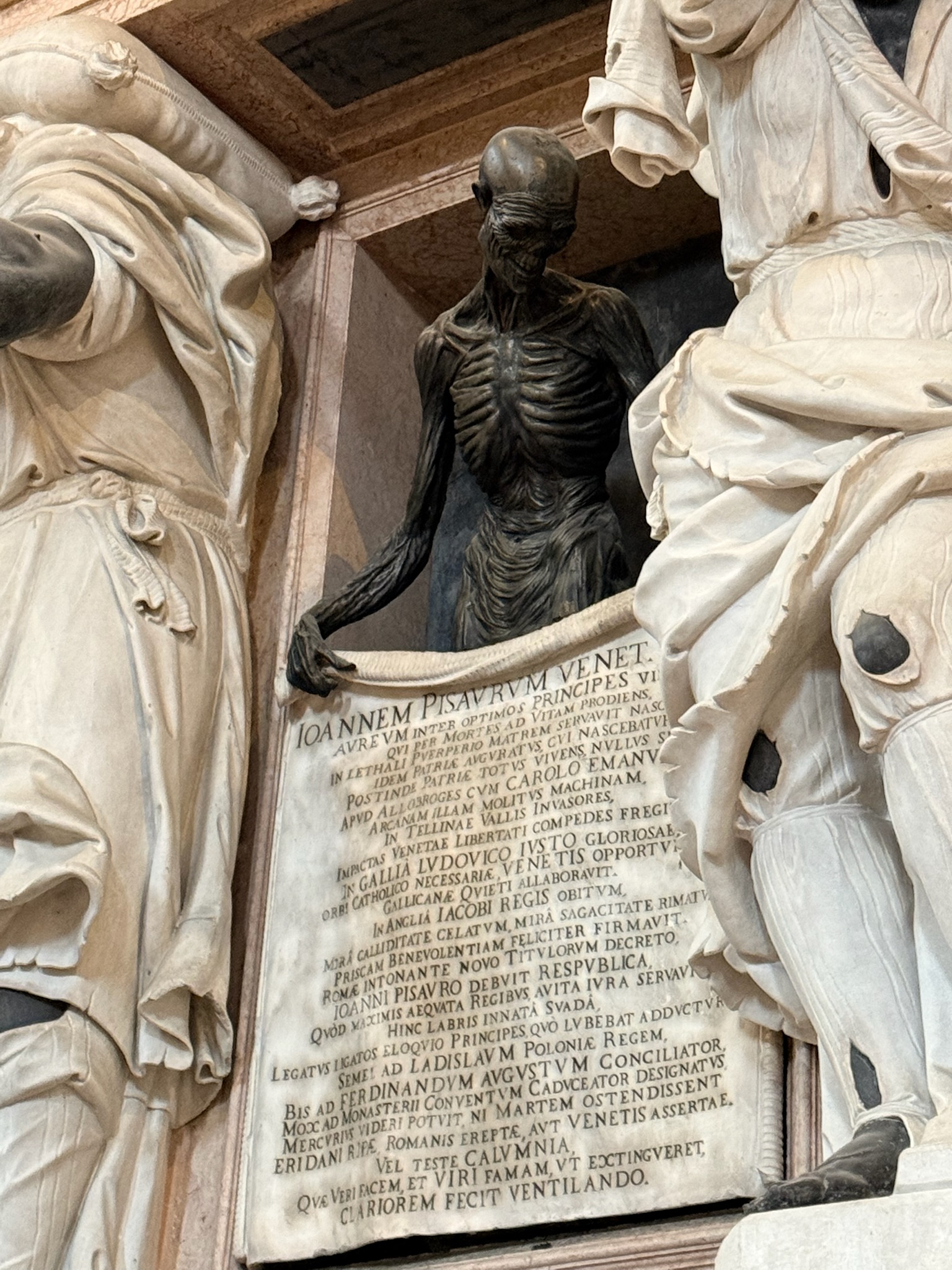
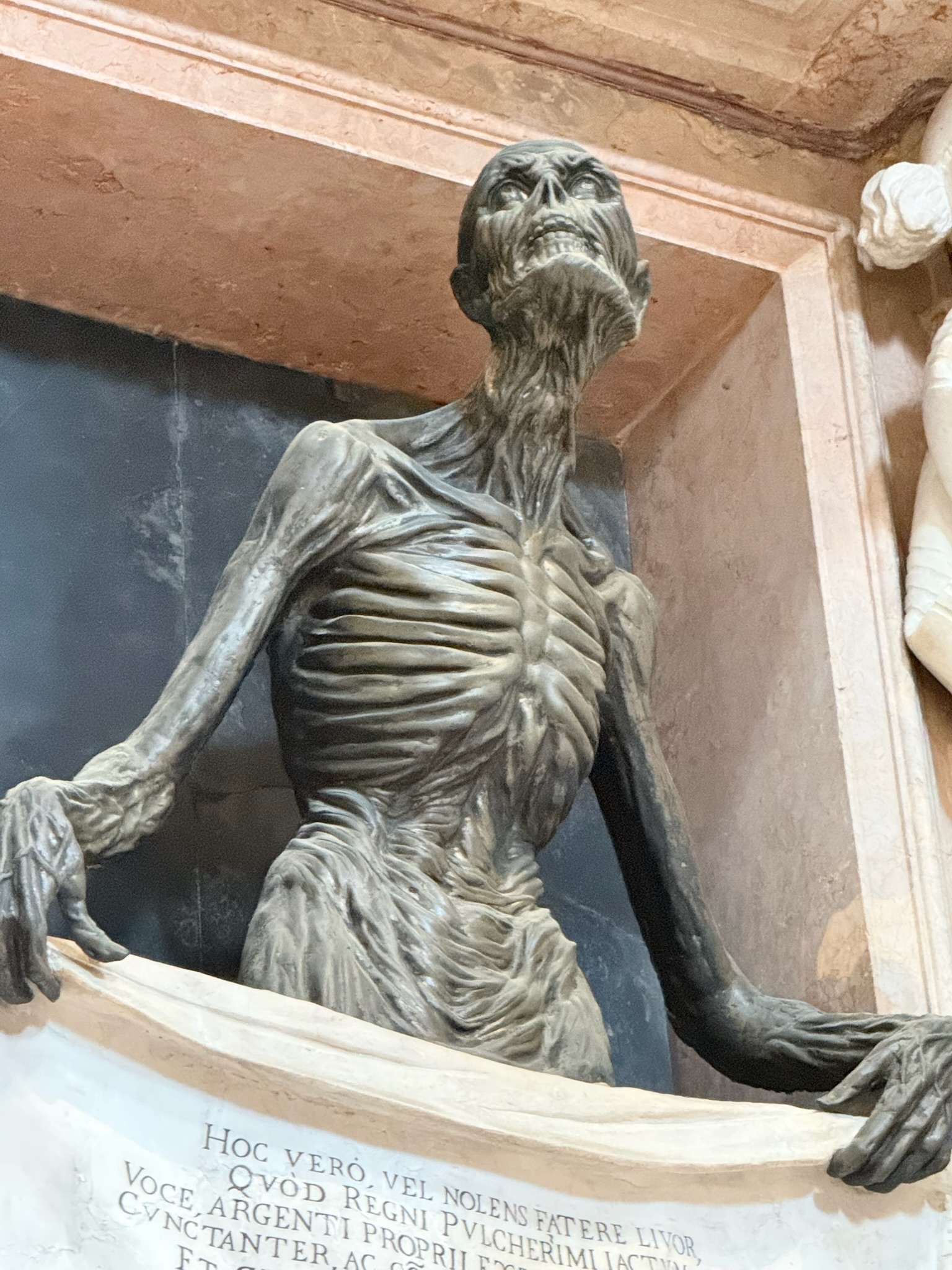
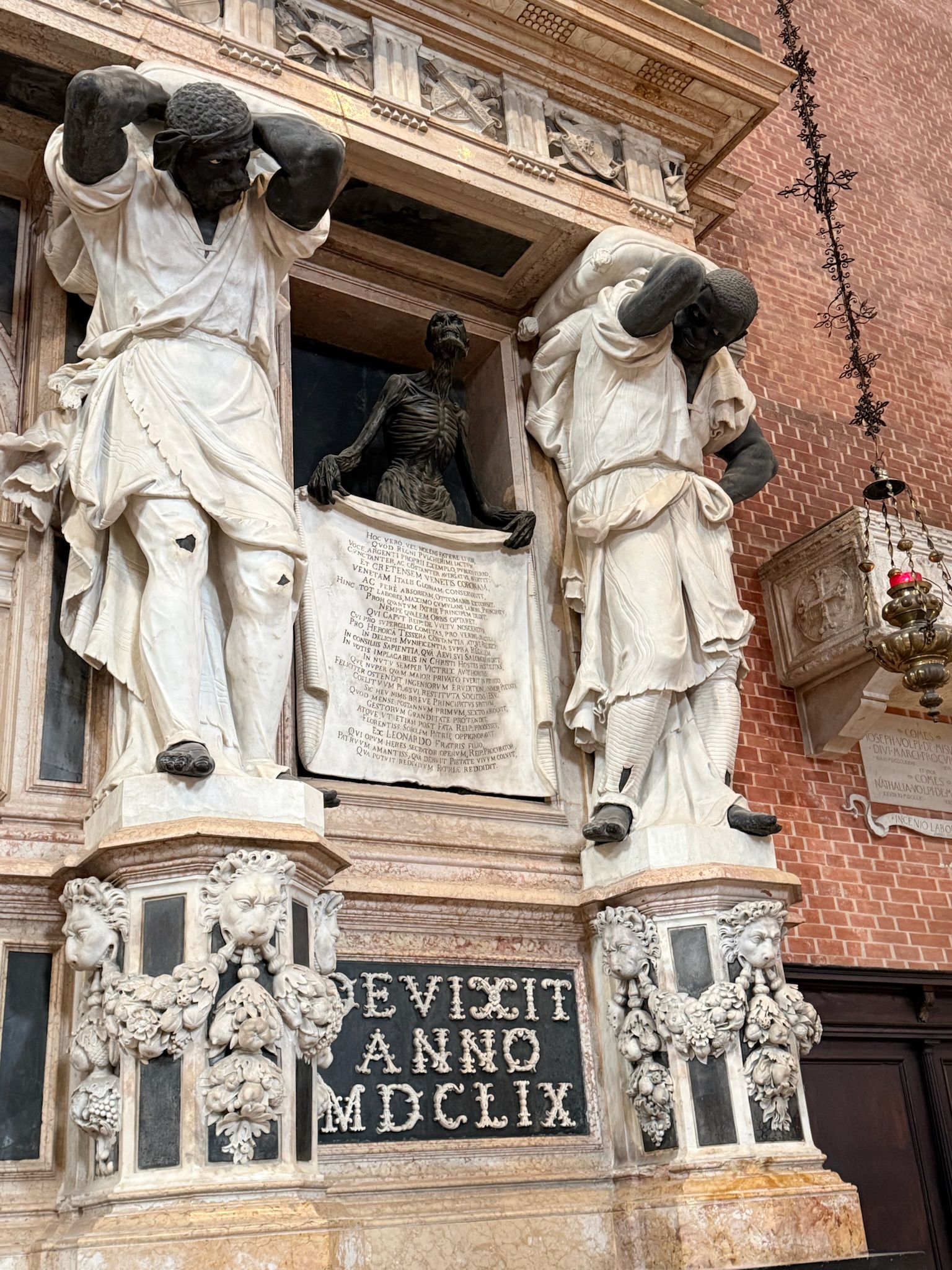
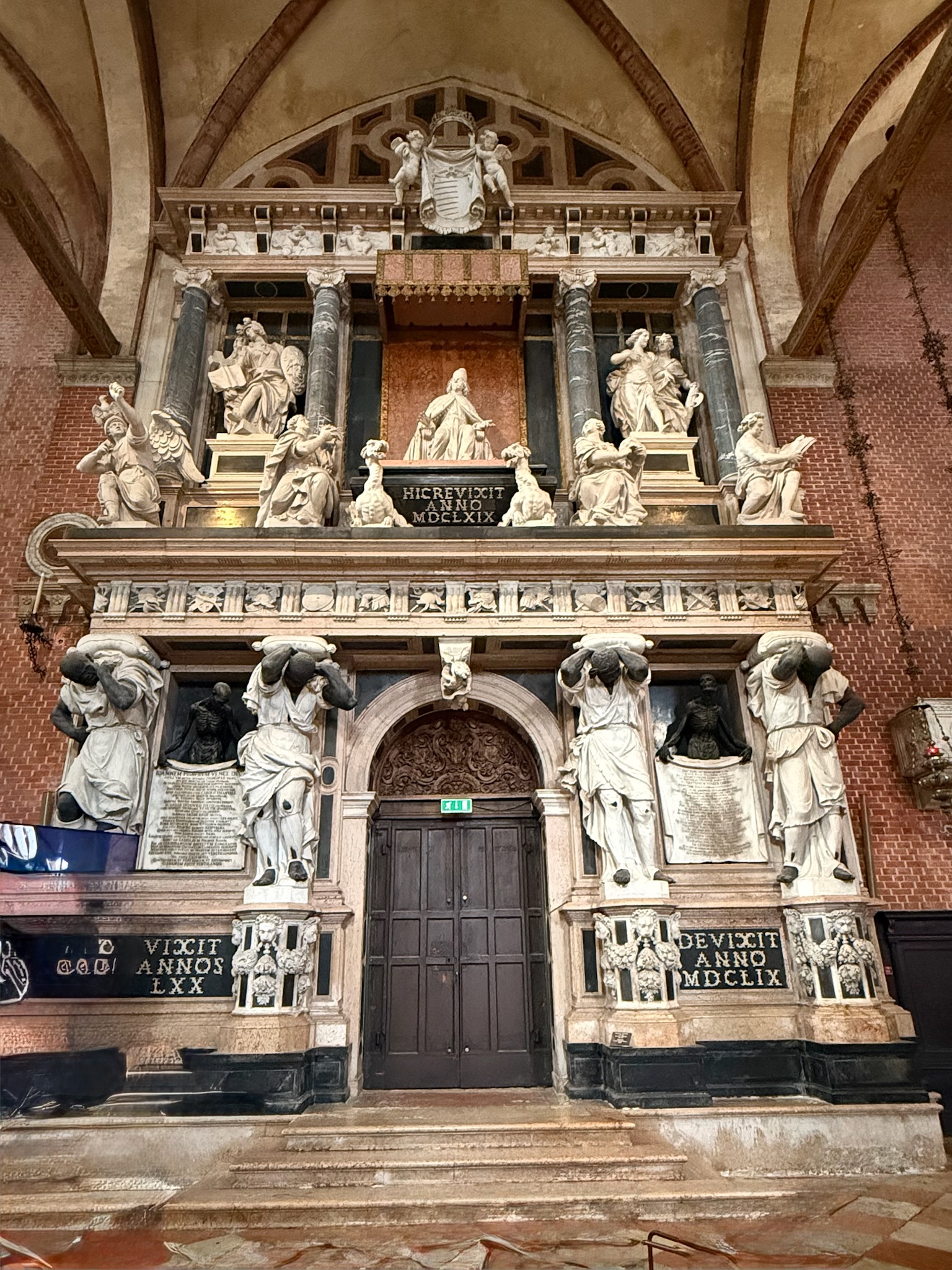
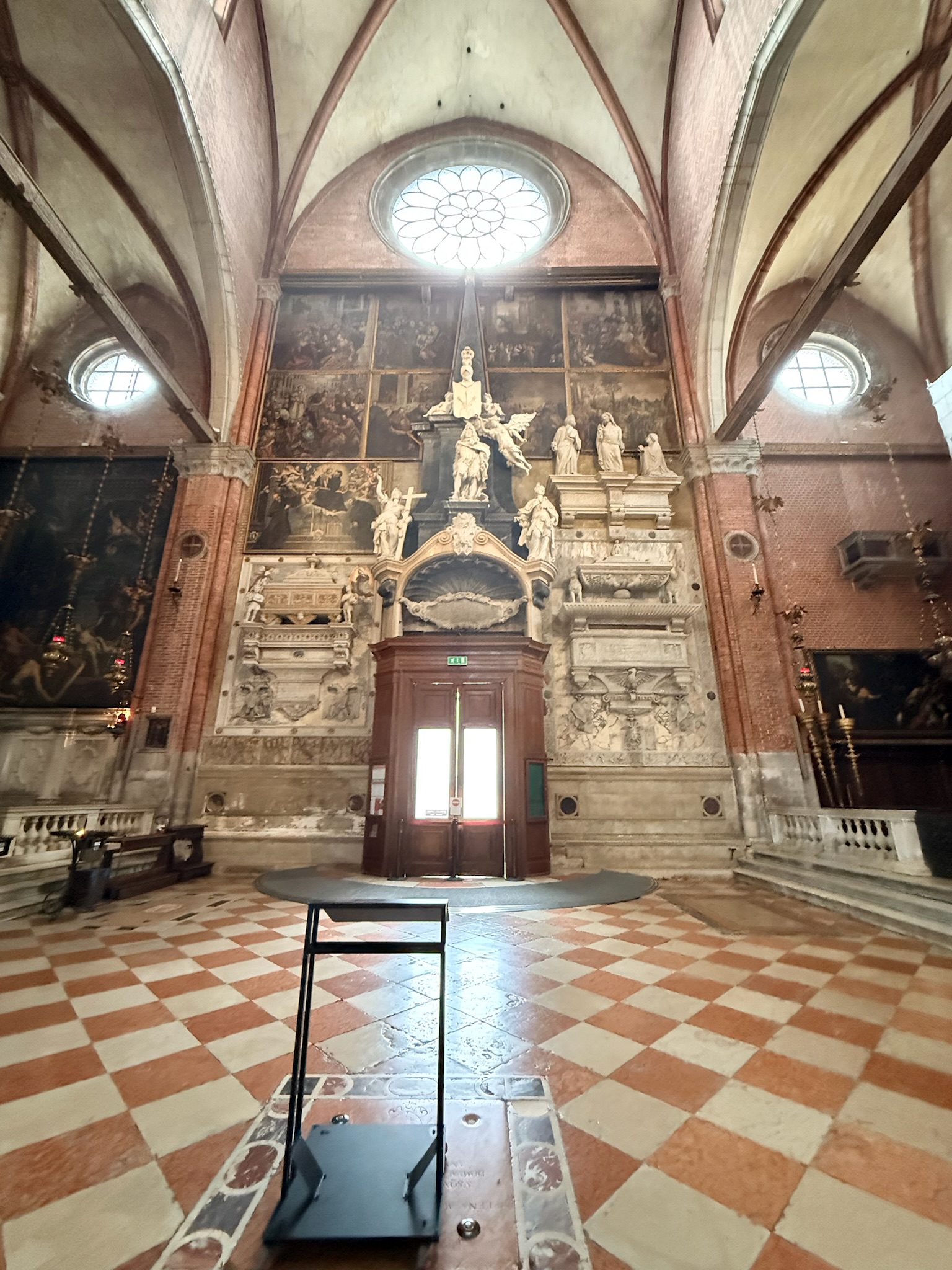
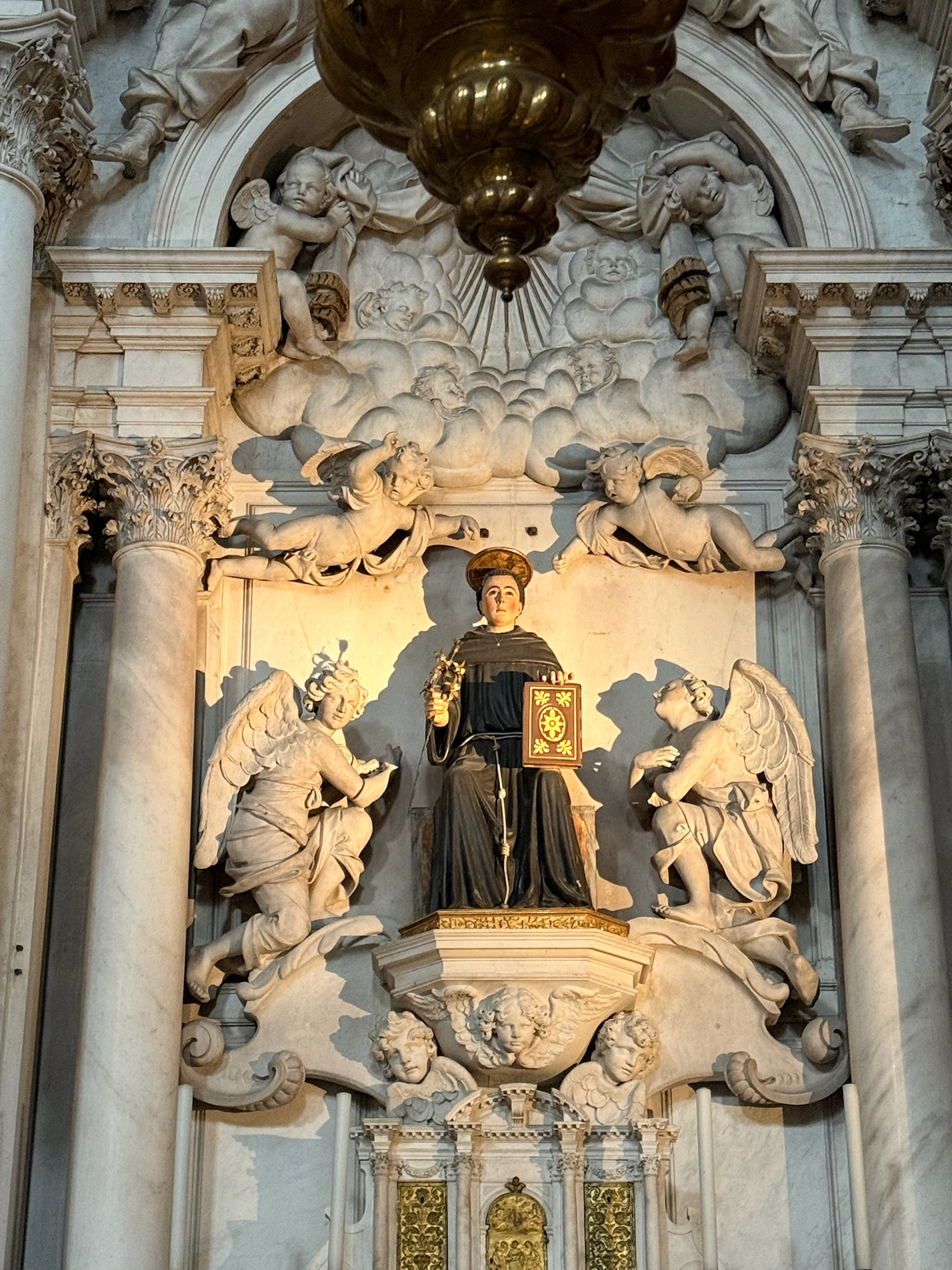
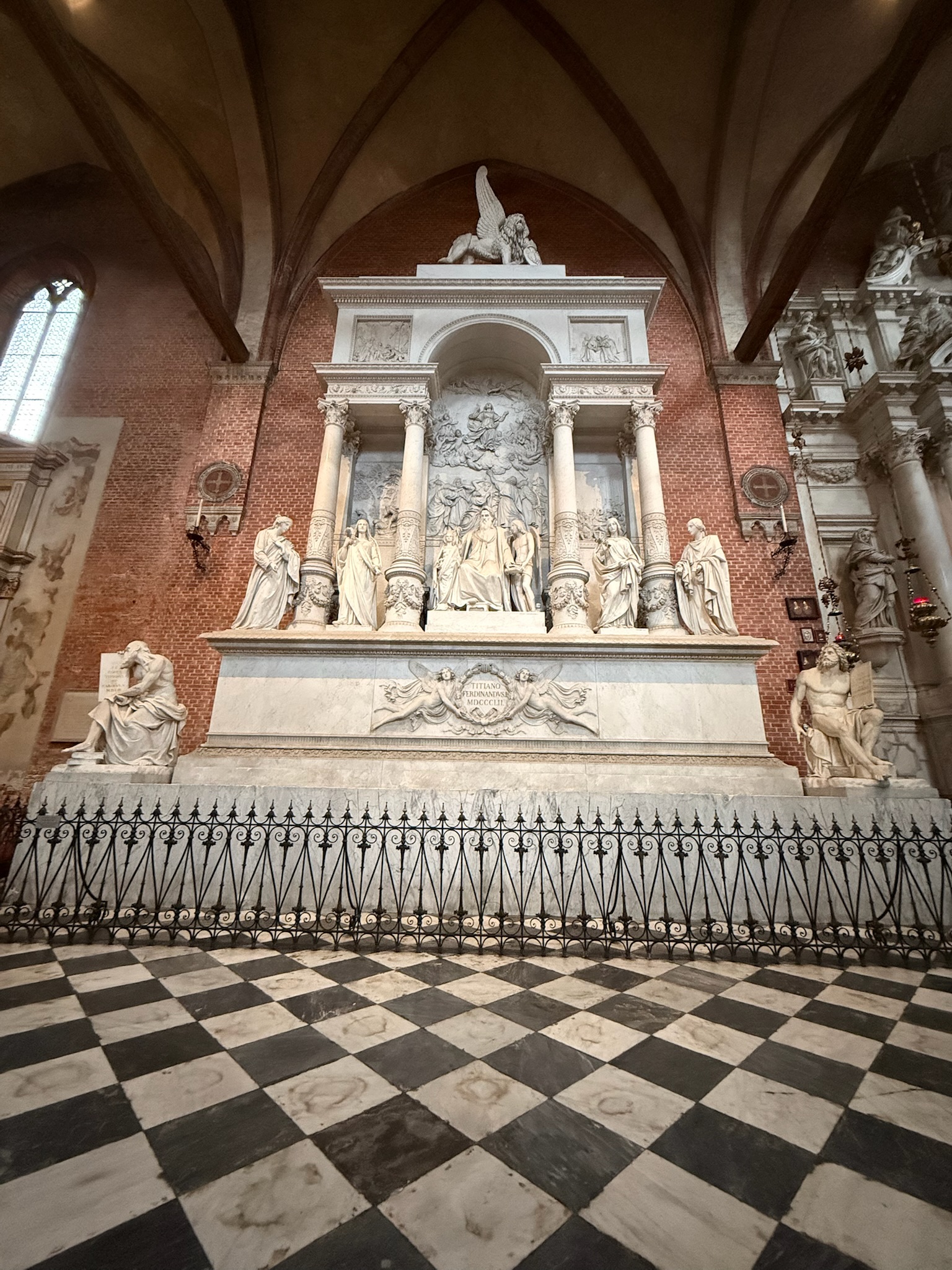
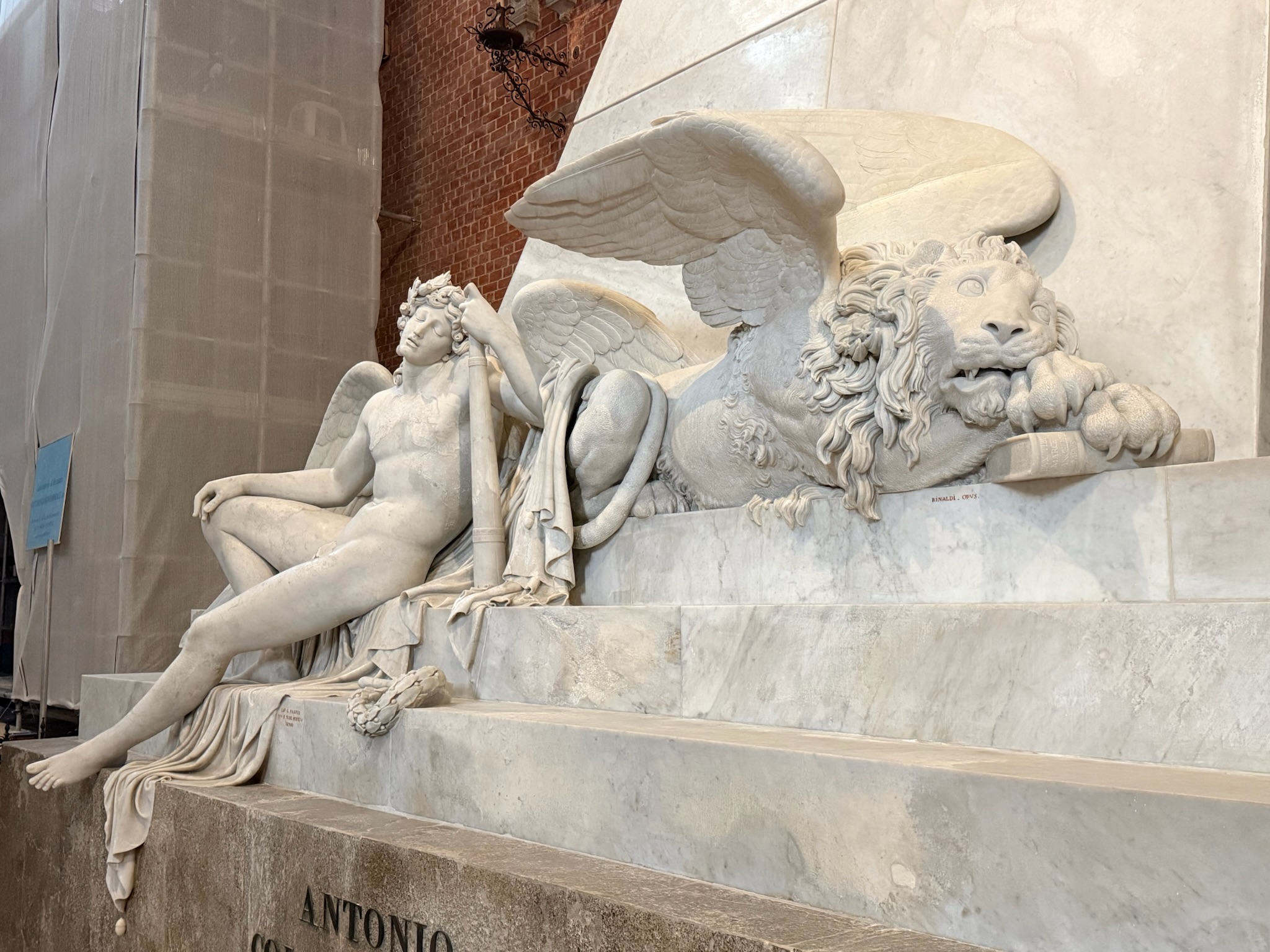
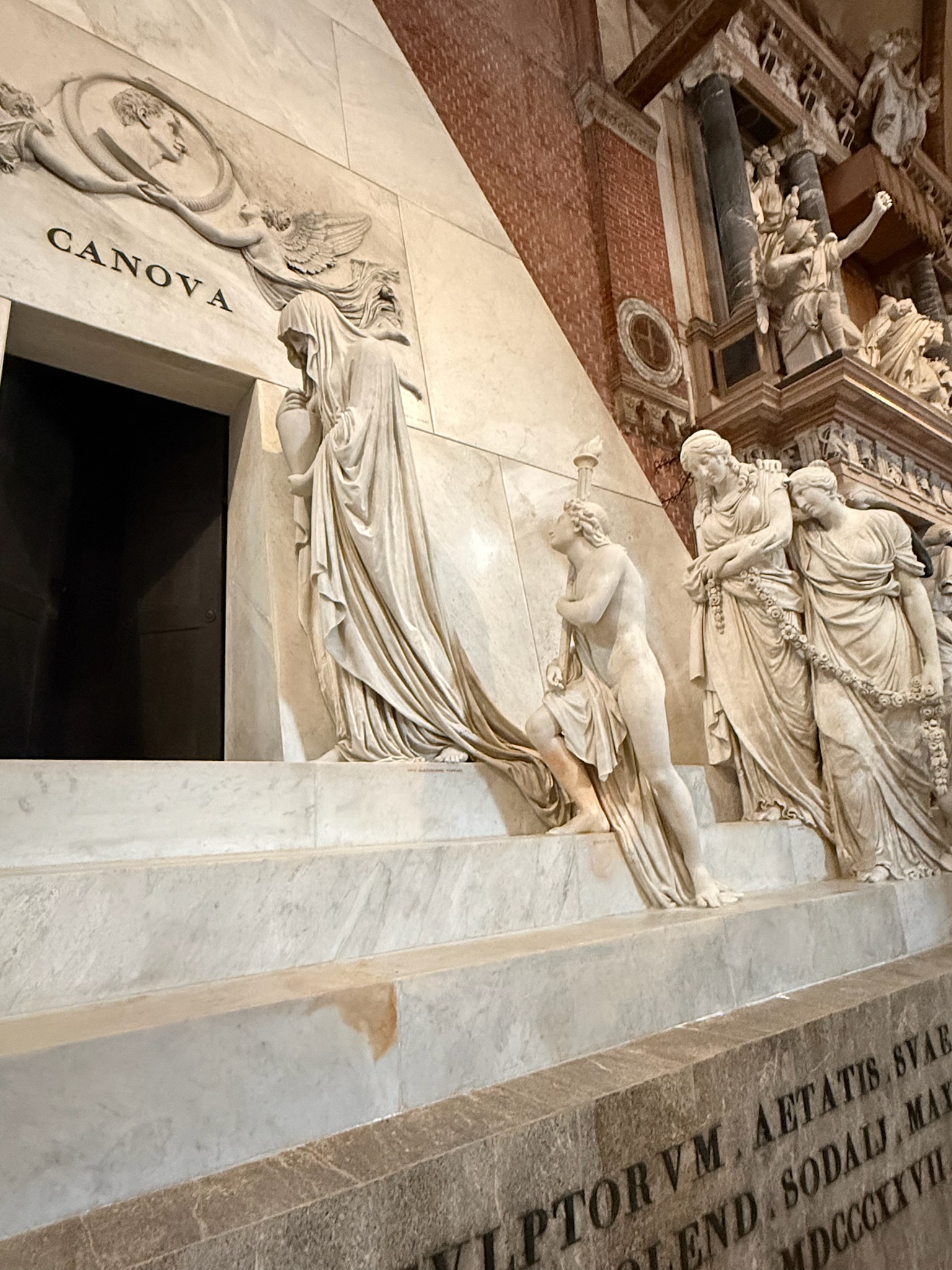
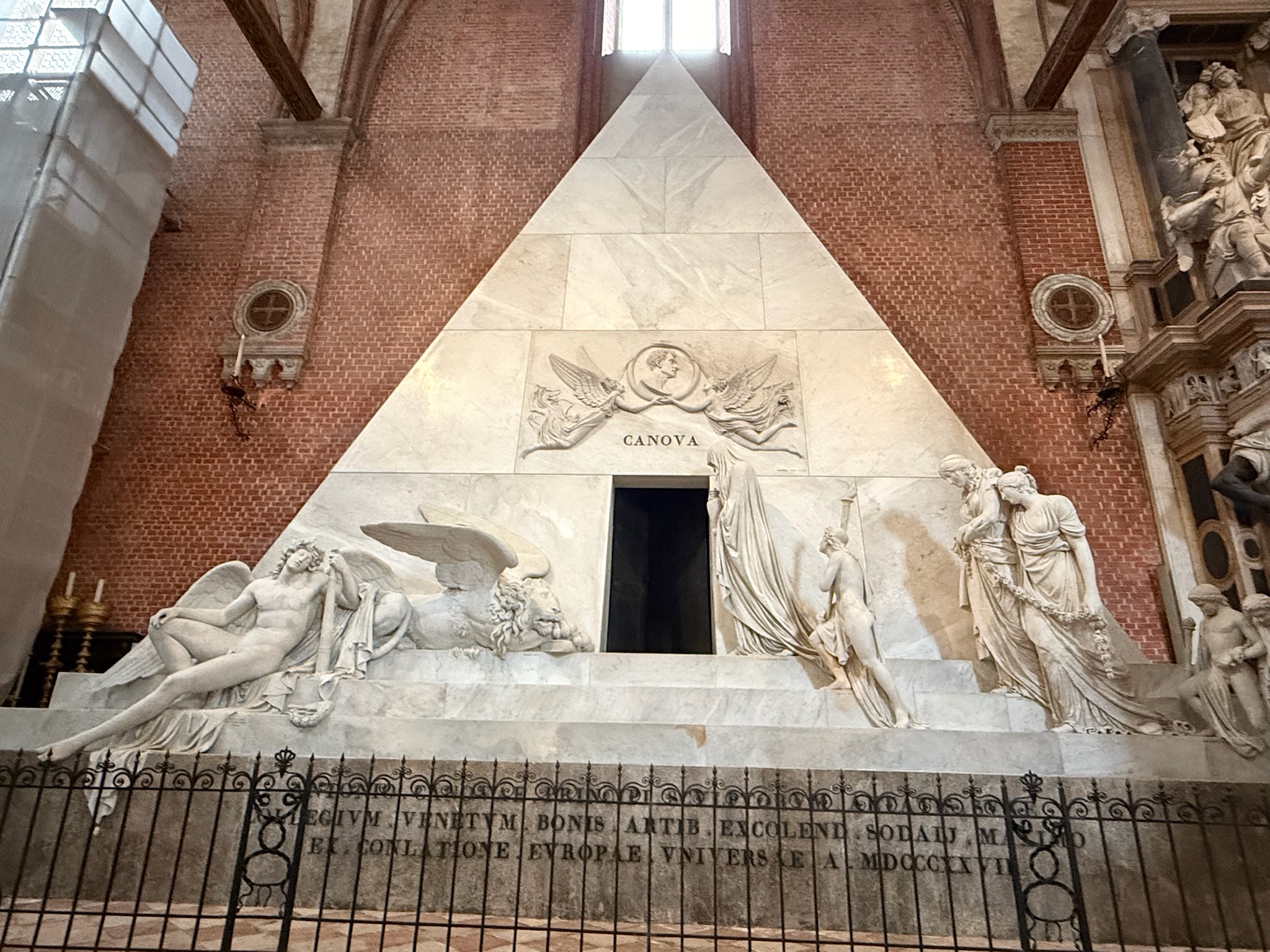
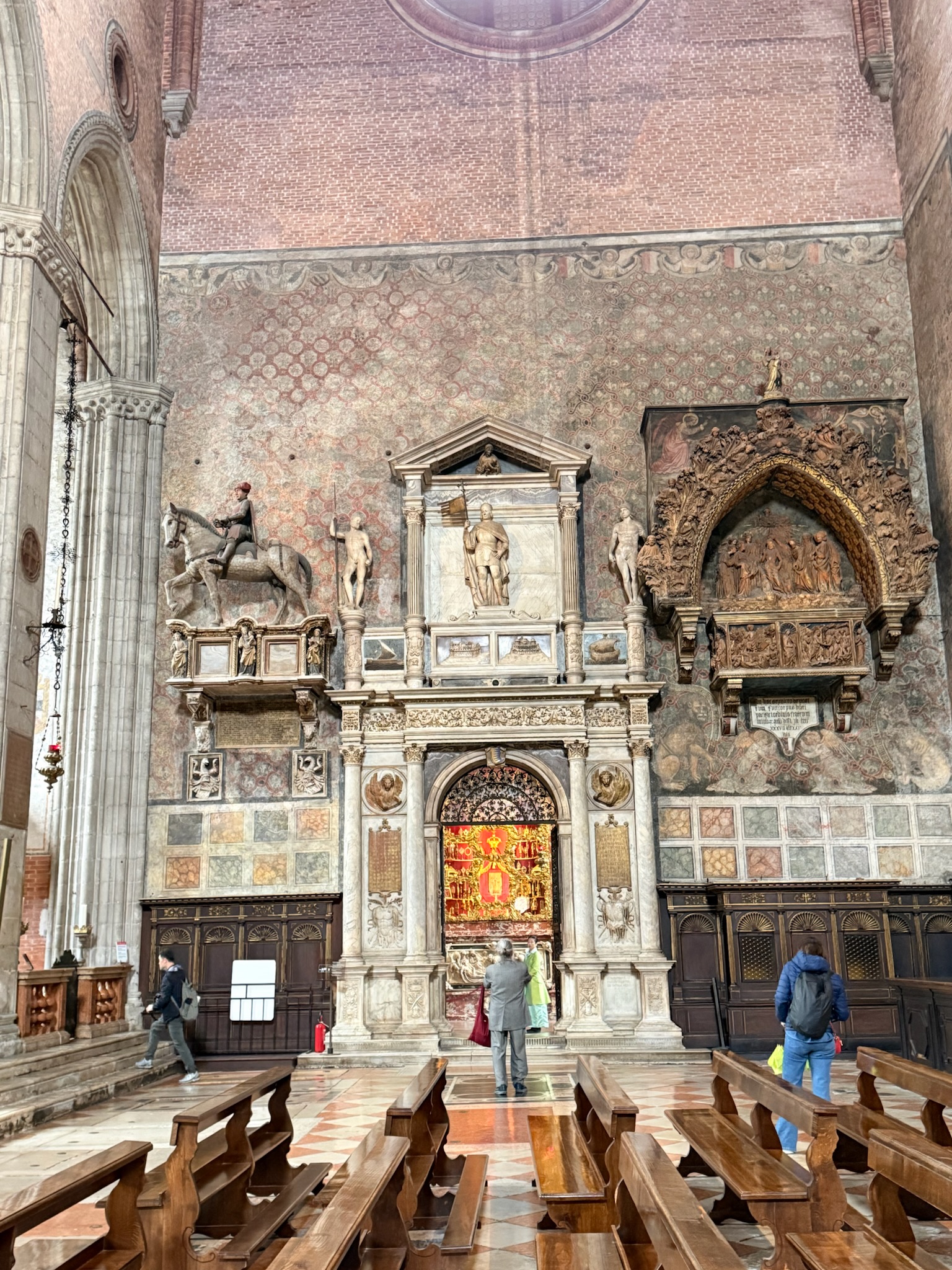
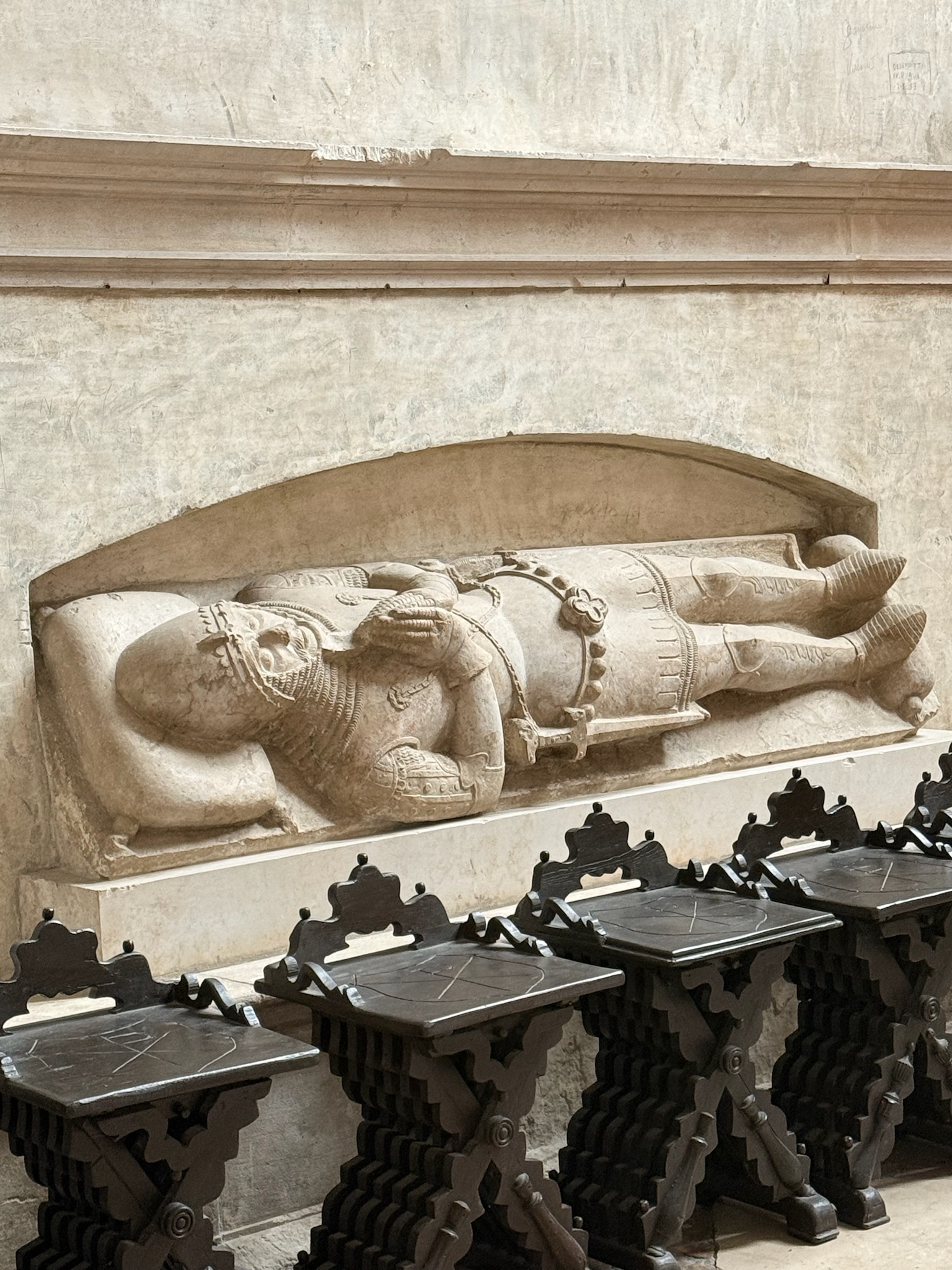
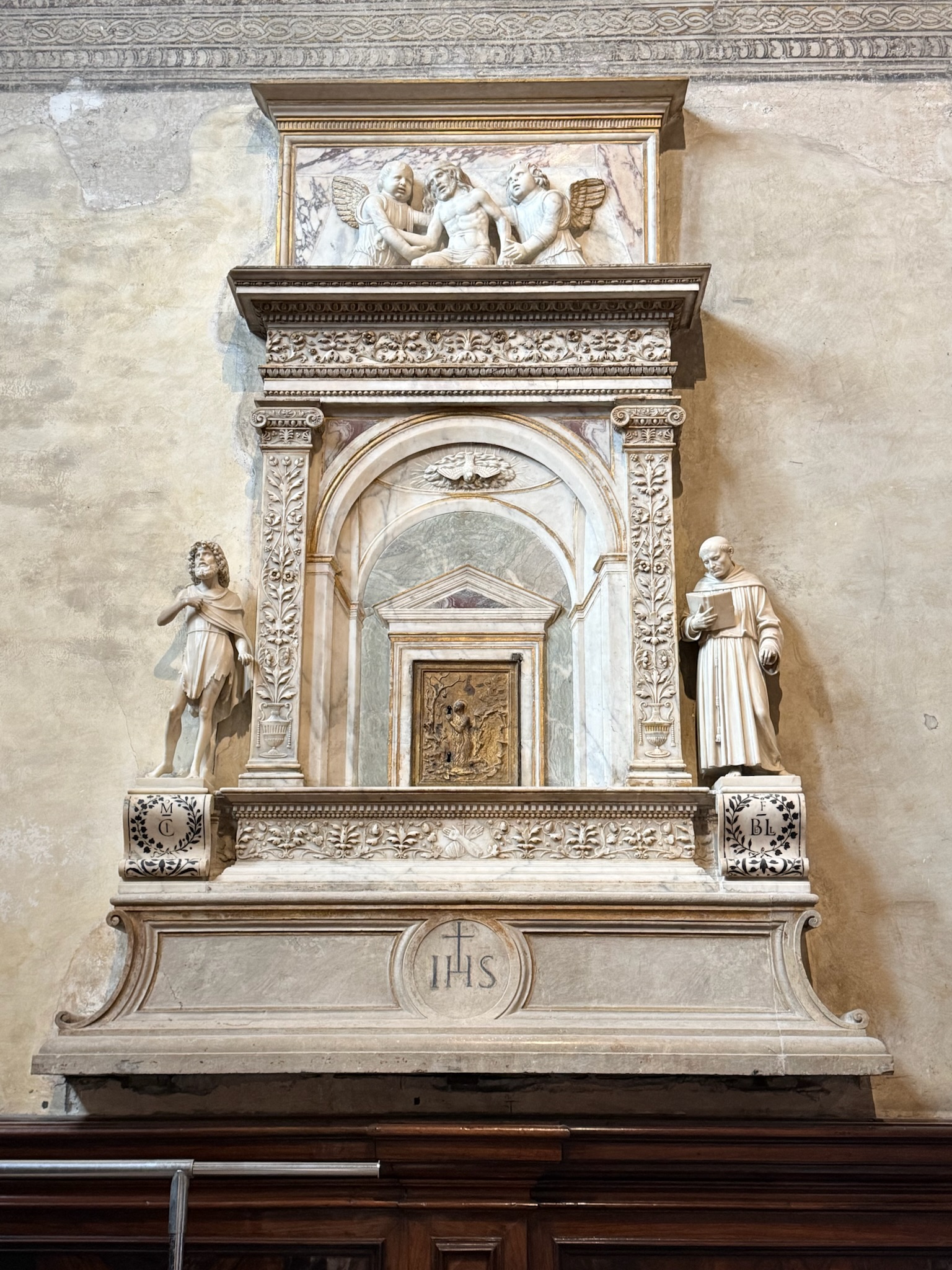
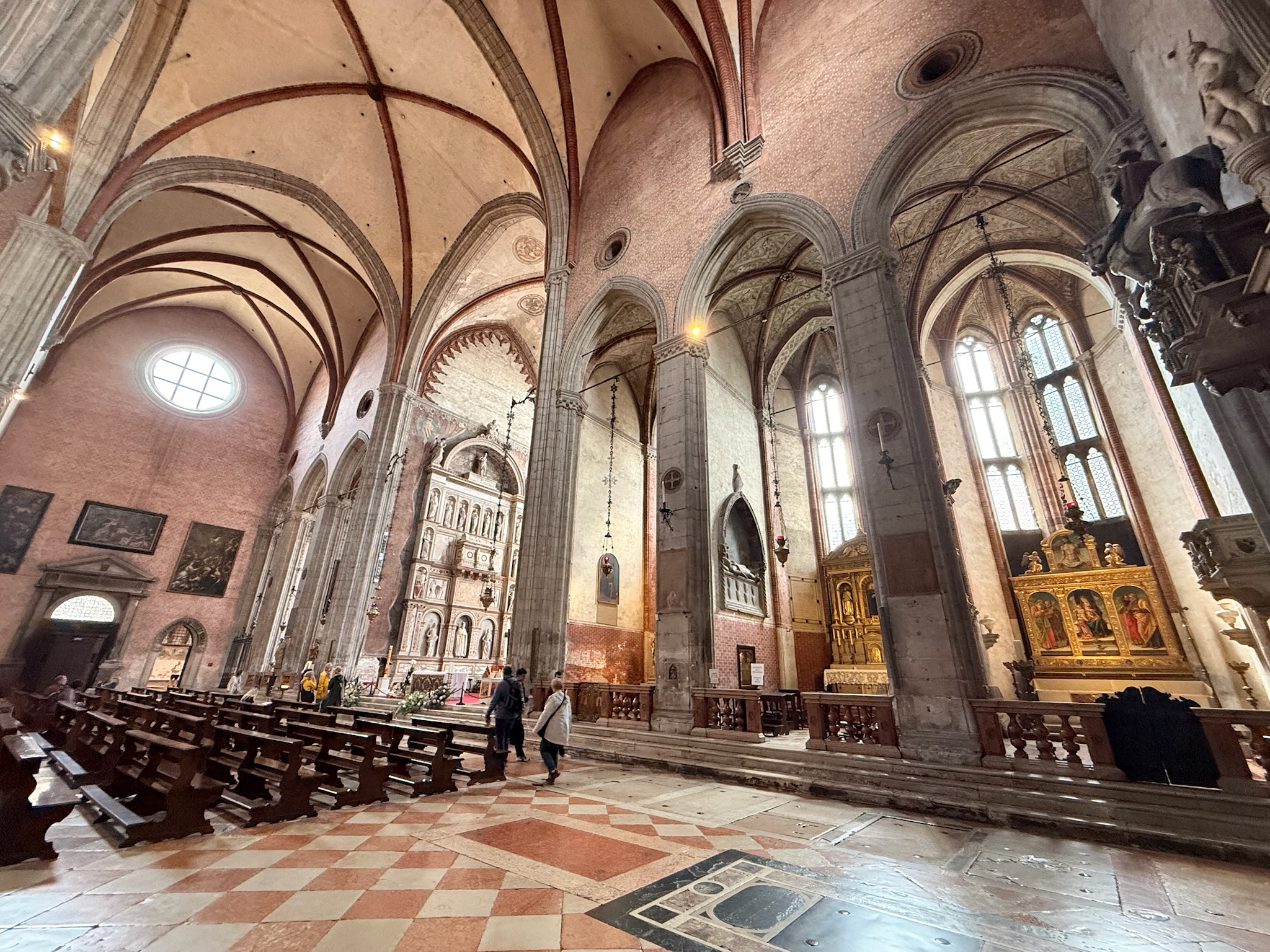
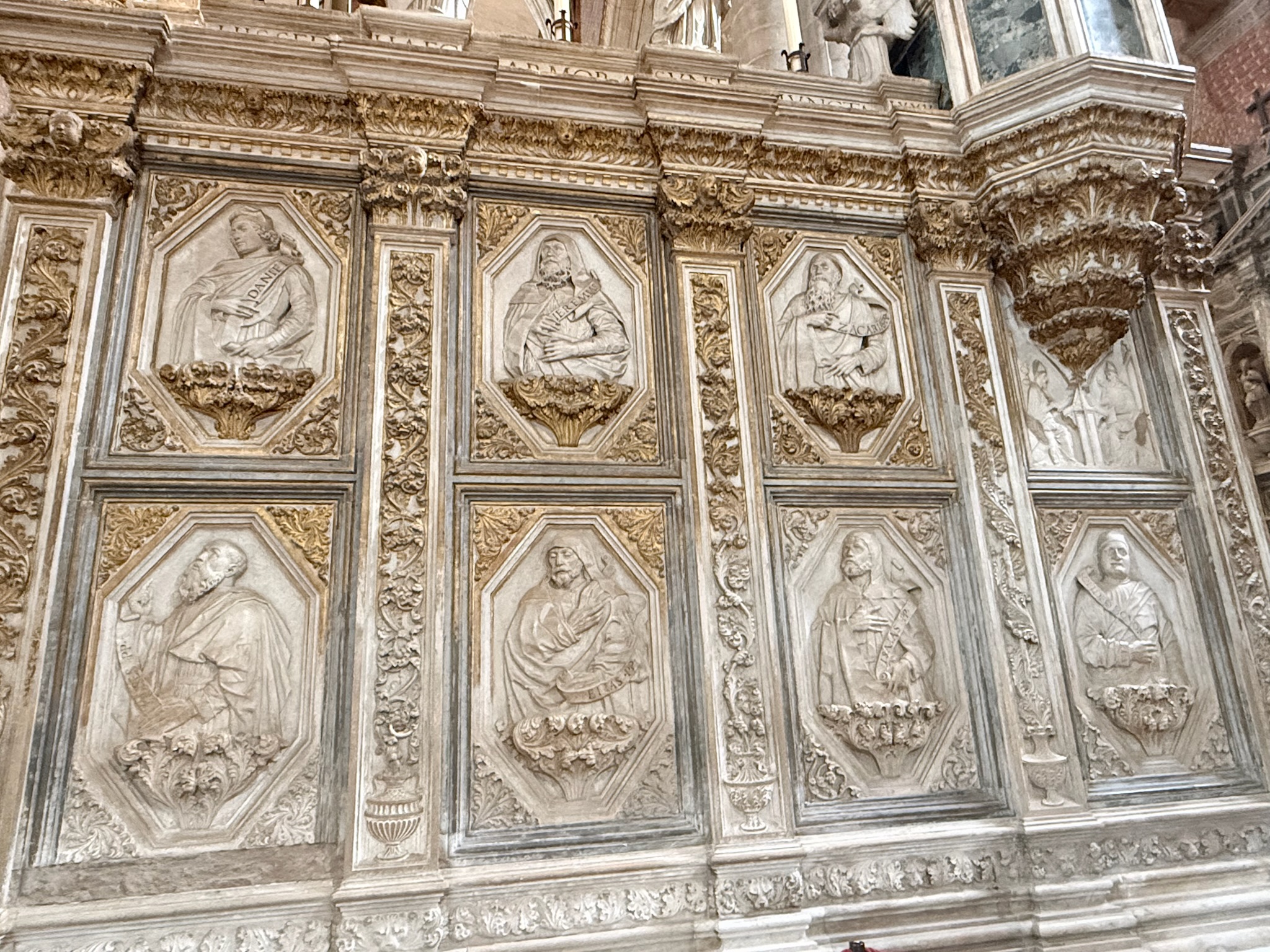
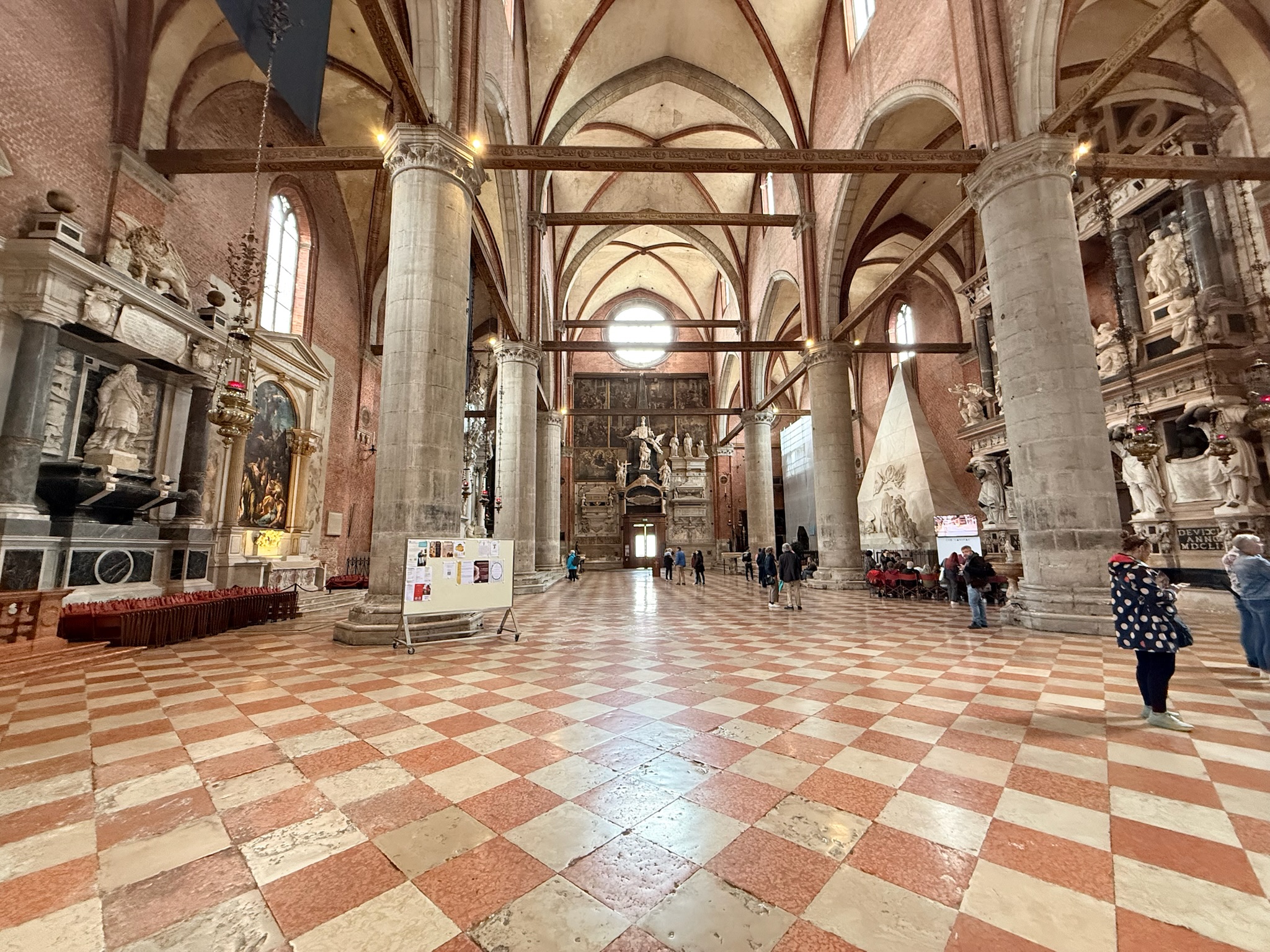
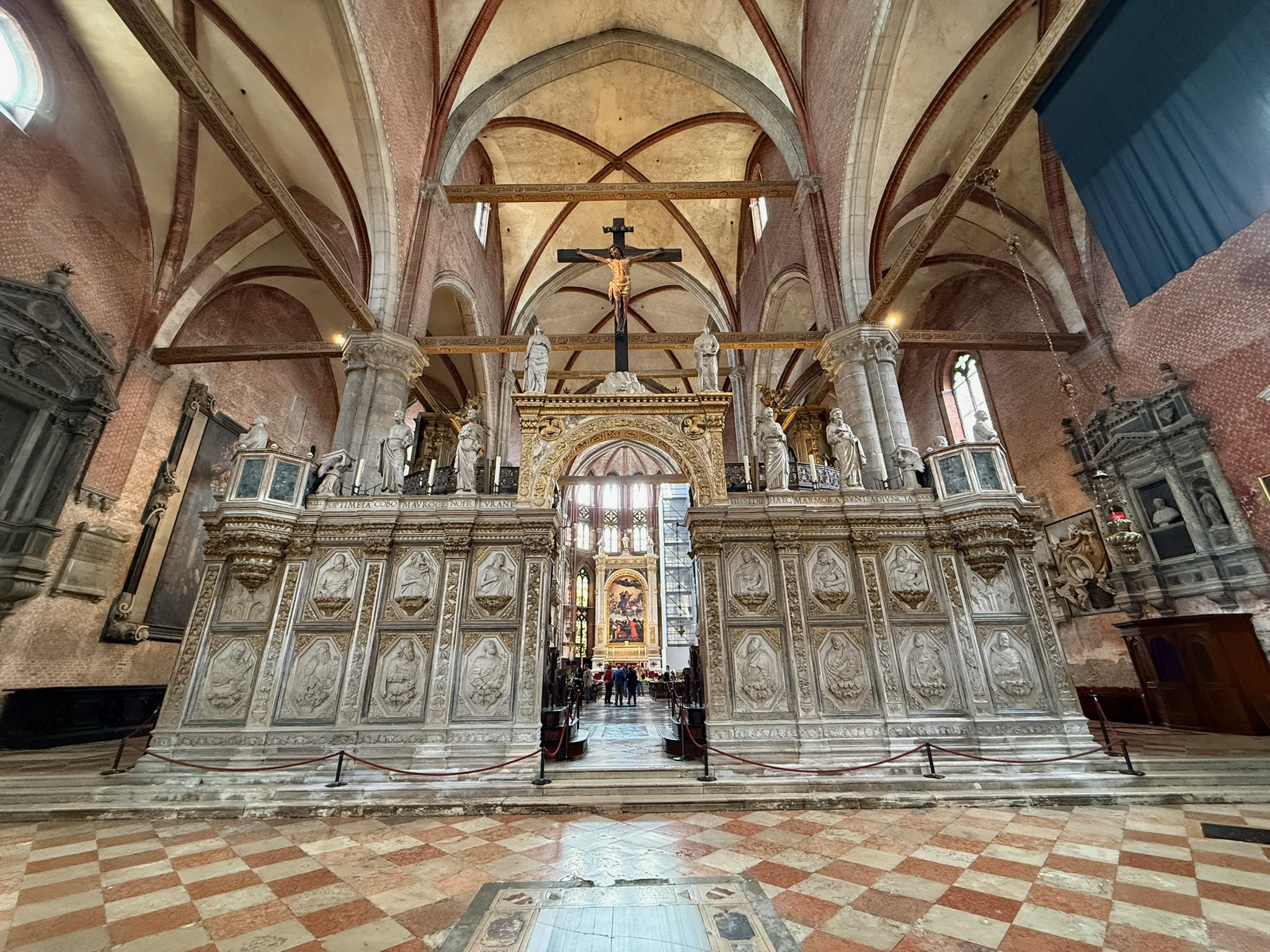
And then there's the interior itself — massive funerary monuments towering overhead with eerie sculpted figures that felt a little creepy in the best possible way, every inch of the ceiling and architecture layered with detail and history. Photos don't really capture how human and emotional the Baptist sculpture feels standing in front of it.
Venice kept doing this, hiding unbelievable beauty behind the most unassuming facades. You turn a corner looking for a laundromat and somehow end up standing inside centuries of history and art.